



Quick Answer: In business copy, the safest starting point is usually human governance, not more prompting : clear source rules, mandatory review, and a…
Last updated: October 10, 2026
Key Takeaways
- Process over products: use governance, not hardware, to control AI copy risk.
- AI often drafts smooth text with missing, stale, or invented facts.
- Hallucinations in business copy usually fall into five failure types.
- Keep drafting separate from approval and fact ownership.
We may earn a commission from qualifying purchases at no cost to you.
Quick Answer: In business copy, the safest starting point is usually human governance, not more prompting: clear source rules, mandatory review, and a claim log catch the mistakes that language models make most often. We focus on managing hallucinations and factual errors in business copy: governance best practices for AI writing because that is where inaccurate copy creates the most risk.
First published 10 October 2026.
How we chose
This article is about process, not hardware, and the evidence base here comes from standards, platform documentation, and policy guidance rather than a test bench. We wrote this piece using the published guidance that matters most for AI copy governance: source-tracing rules, approval workflows, and recordkeeping practices.
What problem are we actually solving?
The problem is not that AI “lies” in a moral sense; the problem is that it confidently drafts business copy with missing, stale, or invented facts. That matters in product pages, service descriptions, case studies, executive bios, and comparison pages where one wrong claim can trigger refunds, legal exposure, or simple loss of trust. The issue is especially visible in **managing hallucinations and factual errors in business copy: governance best practices for AI writing**, where a single unsupported sentence can spread quickly.
I would frame the real question this way: how do you let AI draft faster without letting it publish unsourced claims? The answer is to treat every generated draft as untrusted until it clears a control path built around sources, approvals, and claim ownership, and readers should consult legal or compliance professionals where the subject is regulated. According to the NIST AI Risk Management Framework, organizations should map, measure, manage, and govern AI risk; that is the right lens here. That is especially important for claims about performance, compliance, pricing, availability, and “best” language.
What hallucinations look like in business copy

Hallucinations in business copy usually show up as one of five failures. First, the model invents a feature, certification, customer count, or comparison it was never given. Second, it copies a true fact into the wrong context, such as using a 2022 statistic in a 2026 page. Third, it turns a soft claim into a hard one, like changing “can help” into “guarantees.”
The fourth failure is omission: the model leaves out a caveat that a human writer would know to include. The fifth is source drift, where the draft says one thing while the linked source says another. In practice, the most dangerous errors are not dramatic. They are small, polished, and easy to miss in a 700-word landing page.
A good governance system assumes all five will happen eventually. That is the right mindset because the model is not checking facts the way a trained editor would. It is predicting plausible text.
How do I keep AI business copy accurate?
I keep it accurate by separating drafting from claiming. The model can propose wording, but it cannot be the source of record for a fact. That means the workflow needs named source documents, a claim log, and a final human sign-off before anything goes live.
The claim log is the backbone. For every factual statement that matters, I would require four fields: the claim itself, the source, the date checked, and the owner who approved it. If the claim cannot be logged, it does not belong in the draft. That rule sounds strict, but it saves time because editors stop arguing over vague “sounds right” language.
A useful control is the “source-first prompt.” Instead of asking for copy from memory, feed the model approved source material and tell it to write only from that input. If the task involves regulated or sensitive claims, the prompt should say that unsupported facts must be left out, not guessed. This is where many teams go wrong: they ask for speed, then act surprised when the model fills gaps.
What governance best practices matter most?
The most useful governance stack is small and boring: approved sources, claim-level review, role separation, and a rollback path. I would rather have four controls that get used than twelve controls nobody follows. The point is not perfection; the point is fewer bad claims reaching publication.
Here is the structure that holds up best in day-to-day use:
- Source whitelist: limit drafting to named documents, approved web pages, product sheets, policy text, or legal copy that someone has already vetted.
- Claim ownership: assign each factual category to a human owner, such as marketing for positioning, product for features, legal for compliance language, and finance for pricing language.
- Two-step review: one editor checks factual accuracy, another checks tone and clarity, so the same person is not both author and gatekeeper.
- Change log: record what changed in each revision, especially when the model adds, removes, or softens a claim.
- Rollback plan: keep the previous approved version ready, because a fast takedown beats a public correction after a bad page has been indexed.
The biggest mistake I see is treating review as a general “looks fine” pass, and readers should consult legal or compliance professionals where claims affect regulated or contractual copy. That misses the real risk. Review must be claim-specific, not vibe-based.
What should be in an AI writing policy?
A usable AI writing policy should fit on one page and answer six questions: what the model may draft, what it may not state as fact, who approves claims, what sources count, how corrections happen, and who owns the record. If the policy is longer than the working memory of the people using it, it will become decoration.
I would include a simple rule on absolute claims. Words like “best,” “fastest,” “guaranteed,” “compliant,” and “risk-free” should require a named source or legal approval rather than being used as free-floating marketing language. If the page mentions performance, comparison, or suitability, the source must be current. If the source is stale, the claim is stale.
One often-missed piece is escalation. The policy should say what happens when the editor cannot verify a claim. The safe answer is not “publish and hope”; it is “hold for source or remove.” That is a governance decision, not an editorial preference.
When should AI be banned from drafting altogether?
AI should be banned from first-draft authority in copy that can cause legal, financial, or safety harm if wrong. That includes regulated industries, warranty language, medical or financial advice, employment claims, and anything that compares competitors by name without a source file. In those cases, AI can still help with structure or style, but not with factual invention.
It should also be banned from drafting when the source material is thin. If all you have is a vague brief and a few bullet points, the model will fill gaps with plausible nonsense. That is not a tool problem; it is a bad input problem. A human writer can flag the missing facts. The model cannot know what was never supplied.
How do I prevent stale facts from slipping through?
I prevent stale facts by putting expiration dates on claims. A discount, certification, headcount, customer list, or compliance statement should not live forever in copy just because it once checked out. Even evergreen pages need periodic review, especially if the business changes products, pricing, terms, or jurisdiction.
The simplest method is a review calendar tied to claim type. Pricing and availability need frequent checks. Compliance language needs legal review whenever the underlying rule changes. Case-study numbers need source revalidation before they are reused. If a page has no review date, it is already drifting.
For context, IBM’s 2023 Cost of a Data Breach Report put the average global breach cost at $4.45 million, which is one reason stale or incorrect claims can become expensive fast. The point is not that every copy error causes that scale of loss; the point is that bad information has measurable cost.
What does a good review workflow look like?
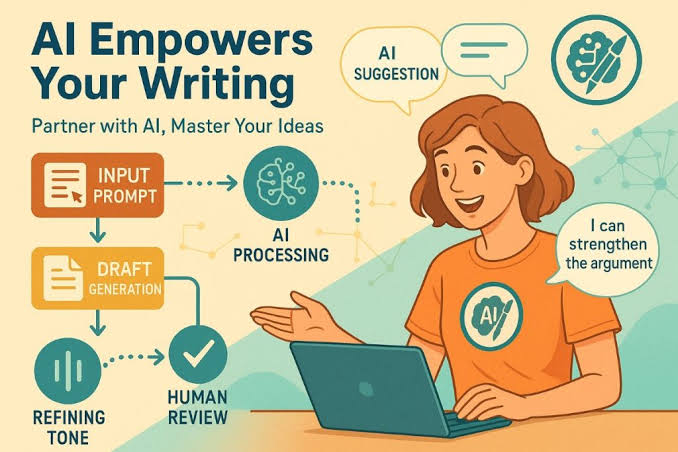
A good workflow has three gates. The first gate is source intake: the writer only uses approved material. The second gate is factual review: someone checks each material claim against the source. The third gate is publication approval: someone confirms the final page matches the approved version.
Because that gate structure only works when people follow it, the order matters. Many teams start with polished prose and then try to “fact check” at the end. That is backward. Once a sentence sounds smooth, people stop questioning it. A better workflow makes it hard for unsupported claims to enter the draft at all.
What tools help, and what do they not solve?
Tools help with tracing, versioning, and review queues, but they do not solve judgment. A content platform can store approvals and show diffs. An AI checker can flag unsupported claims. A browser plugin can remind writers to cite sources. None of those tools can tell you whether a claim is strategically acceptable for your brand and risk profile.
That is why I would not buy an “AI accuracy” promise from any single vendor. The better question is whether the system supports human control at the claim level. If it does not, it will only make bad copy faster. For governance teams, the CIPR code of conduct is a useful reminder that accuracy and transparency are core duties, not optional extras.
What are the most common mistakes to avoid?
The most common mistake is trusting the first draft because it reads smoothly. Fluency is not verification. The second mistake is reviewing for grammar while ignoring facts. A polished falsehood is still false.
The third mistake is letting one person both prompt and approve every high-risk page. That creates blind spots and makes it hard to catch self-justification. The fourth is using public web text as the only source for claims that should have come from internal records. Public text can be outdated, incomplete, or copied from somewhere else.
The fifth mistake is building no correction path. If an error reaches the site, there should be a named person, a takedown rule, and a correction note process. Without that, the same error gets recopied into emails, brochures, and sales decks.
FAQ
Can I trust AI to write product descriptions?
No, not without human review of every material claim. AI can help draft structure and wording, but it should not be the source of facts about features, compatibility, certifications, or performance. For regulated claims, check with legal or compliance before publishing.
What is the best way to fact-check AI copy?
The best method is claim-by-claim verification against approved sources, not a general read-through. I would use a claim log, a source list, and a final editor who checks each important statement against the source text. If a claim cannot be verified, remove it.
For a practical reference, the FTC’s advertising guidance is useful because it emphasizes that claims must be truthful, not misleading, and substantiated.
Should I tell readers that AI helped write the copy?
Yes, if your organization has a disclosure policy or if the use of AI is material to trust in your process. Disclosure does not fix bad facts, but it reduces confusion about how the text was produced. The more sensitive the subject, the more useful transparency becomes.
What kind of copy needs the strictest governance?
Anything that can change a buying decision or create liability needs the strictest controls. That includes pricing pages, comparison pages, compliance language, service promises, case studies, and claims about results. If a wrong sentence could cost money or damage trust, it needs a human owner.
Final verdict
The safest answer is to govern AI copy like a publishing risk, not a writing trick: use approved sources, log every important claim, assign ownership, and require human sign-off before publication. If we had to pick one principle to keep open in a tab, it would be this: AI can draft language, but only our process can make it true.
Drafted with AI; not yet reviewed by a person.