





If you want AI writing tools to help your authors, the real job is not “getting everyone to use ChatGPT.” The job is setting a clear 30-day onboarding…
Last updated: October 10, 2026
Key Takeaways
- A rushed rollout can lose writers; a clear plan, rules, and review process works better.
- Onboard authors in three stages: policy, practice, and review.
- Most writers do better with 5 repeatable templates than with 50 experimental ones.
- Build quality checks into both drafting and publication.
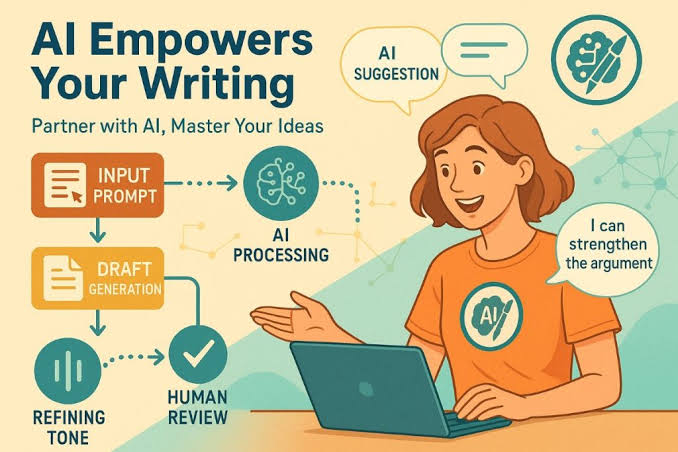
If you want AI writing tools to help your authors, the real job is not “getting everyone to use ChatGPT.” The job is setting a clear 30-day onboarding plan, a small ruleset, and a review process so drafts come back faster without turning your style into generic machine prose. This onboarding and training playbook for authors adopting AI writing tools is built to do that with a simple workflow.
What should an author AI onboarding plan actually solve?
It should solve three problems: tool confusion, uneven quality, and fear of getting the workflow wrong. A rushed rollout can lose writers, so a good onboarding plan gives authors a single approved workflow, a few safe use cases, and a standard for what a usable AI-assisted draft looks like.
I would frame the program around outputs, not enthusiasm. An author does not need to “become AI-native” in week one. An author needs to learn how to get a clean outline in 10 minutes, a first draft in 30 to 60 minutes, and a revision pass that still sounds like them. That is the point.
This onboarding and training playbook for authors adopting AI writing tools works best for freelance authors, in-house writers, content teams, and editorial groups adopting tools such as ChatGPT, Claude, Gemini, or Microsoft Copilot. It is not a fit for teams that need zero tool usage because of strict confidentiality rules, or for writers who produce highly original reporting and cannot tolerate a generic draft stage. In those cases, the cost of speed can be too high.
The core mistake is treating AI like a replacement instead of a drafting assistant, and guidance from organizations such as the National Institute of Standards and Technology and IBM supports keeping human oversight in the workflow; consult a professional if your use case has legal, compliance, or security implications. That mistake usually creates one of two bad outcomes: bad content that sounds flat, or frustrated writers who ignore the tool and keep working the old way. A better goal is narrower: reduce blank-page time, standardize first drafts, and keep editorial judgment in human hands.
How do you onboard authors to AI writing tools in 30 days?
Because the first month sets the habits, you onboard authors in three phases: policy, practice, and review. That is enough time to build confidence without letting bad habits harden.
Here is a workable 30-day sequence:
- Week 1: Set the rules and pick one primary tool. Choose one model or platform, such as ChatGPT Enterprise, Claude, Gemini, or Copilot, and define what it may be used for: outlines, headlines, summaries, rewrites, and first-pass drafts. The result should be one page of rules, not a long policy manual.
- Week 1: Show 3 allowed workflows. Demonstrate three concrete uses: turning notes into an outline, converting an outline into a section draft, and rewriting for tone or clarity. Each author should see the same 10-minute demo so expectations stay consistent.
- Week 2: Give each author a sandbox assignment. Ask for a 500- to 800-word draft, a 5-bullet outline, or a headline set. The deliverable should be small enough to finish in 1 hour and broad enough to expose weak spots in prompting and judgment.
- Week 2: Add a review checklist. Review for factual accuracy, voice consistency, repetition, and missing logic. A pass/fail checklist cuts debate and keeps feedback practical.
- Week 3: Teach revision, not just prompting. Show authors how to tighten AI-generated text, replace vague nouns, and verify claims before publication. The result is cleaner copy, not just faster copy.
- Week 4: Measure adoption with one or two metrics. Track draft turnaround time, editor revision depth, or the percentage of assignments that used the approved workflow. Keep the metric simple enough to discuss in 15 minutes.
The mistake here is overload. A 14-page policy, three tools, and five prompt templates on day one will produce silence. One tool, one page of rules, and one assignment type are enough for the first month.
What should the AI use policy say, exactly?

It should say what authors may enter, what they may never enter, what must be checked by a human, and who approves exceptions. That is the practical center of the whole onboarding and training playbook for authors adopting AI writing tools.
I would keep the policy short enough to fit on 1 page or at most 2 pages. A policy that takes 20 minutes to read will get used; a policy that takes an hour will get ignored. Include these items:
- approved tools and versions
- permitted use cases
- prohibited inputs, such as unpublished client data, private source material, personal data, or embargoed reporting
- citation and fact-check rules
- disclosure rules for clients or editors
- who owns the final text
- where prompt logs or draft histories are stored, if they are stored at all
A strong policy names the risk plainly. AI can paraphrase sensitive notes, blur attribution, and invent details with a smooth tone. That is why the human author must remain responsible for facts, claims, and source quality; OpenAI’s usage guidance and the OECD AI Principles both emphasize careful oversight. No policy should pretend the tool is “creative support” only; that phrasing hides the real risk, which is plausible nonsense.
This section also needs a limit: I would not make AI compulsory for every author. Some writers work better with conventional drafting and use AI only for rewrites or research summaries. Compulsory use can reduce morale and increase hidden work, especially among senior writers with a strong voice. A policy should set boundaries, not force uniform style.
If confidentiality matters, involve legal, compliance, or security staff before rollout. I am not giving legal advice here, but if your authors handle sensitive client, patient, financial, or proprietary material, the tool choice and data rules need proper review before anyone uploads a draft.
Which prompts and templates should authors learn first?
They should learn a small set of prompts that map to real editorial tasks, not clever prompt tricks. Most writers do better with 5 repeatable templates than with 50 experimental ones.
The first templates I would teach are these:
- Outline from notes: “Turn these notes into a 6-part article outline for [audience], with a practical angle and one section on mistakes.”
- First draft from outline: “Write section 2 in a direct editorial tone, 300 words, avoid jargon, include one example and one caveat.”
- Voice cleanup: “Revise this paragraph to sound more concise, authoritative, and human. Keep the meaning, remove generic phrasing.”
- Headlines: “Generate 10 headline options for this topic, grouped by benefit-led, curiosity-led, and search-led angles.”
- Fact check prompt: “List the statements in this draft that require verification before publication.”
The number matters because it limits cognitive load. If an author has to remember 12 prompt styles, the tool becomes another burden. If the author can master 5 prompts in a week, the tool becomes part of the writing process.
I would also train authors to include constraints every time: word count, audience, format, tone, and what must not appear. That produces better drafts than vague prompts that say “write about X.” The model cannot read your mind, and most weak outputs come from vague instructions, not from the model itself.
One caution: prompt libraries age quickly. A prompt that works well for a 2024 model may need adjustment for a newer one. Keep examples current and review them every 90 days so the training materials do not go stale.
How do you train quality control without slowing everyone down?
Because AI drafts still need review, you train quality control by making checking a habit at two points: before drafting and before publication. That keeps the extra work small and predictable.
The easiest structure is a 2-pass review:
- Pass 1, before drafting: confirm angle, audience, source quality, and the one sentence the piece must prove.
- Pass 2, before publication: check facts, voice, repetition, structure, and anything the model may have hallucinated or overgeneralized.
For editors, I would use a 7-item checklist: factual claims, names, dates, source attribution, logical flow, tone match, and unnecessary repetition. If a draft fails on 3 or more items, send it back for revision instead of line-editing it into shape. That saves time and teaches the author what “good” looks like.
A useful training exercise is side-by-side comparison. Give authors two versions of the same AI draft: one unedited, one corrected. Ask them to identify what changed and why. In 15 to 20 minutes, they will usually see the difference between “acceptable machine draft” and “publishable copy.”
The main mistake here is over-editing. If editors rewrite every AI-assisted draft from top to bottom, authors stop learning and the workflow stalls. Another mistake is pretending AI text needs no review because it sounds polished. Polished text can still be wrong. The review step exists because fluency is not accuracy.
This is also where standards matter. If your publication follows AP style, Chicago style, house style, or a branded voice guide, pair that standard with the AI workflow. Otherwise the draft may be technically clean but still off-brand.
What should managers watch during the first 60 days?
Therefore, managers should watch for three signals: faster drafts, fewer style corrections, and fewer factual rescues. Those tell you whether the program is helping or just changing where the work happens.
I would not measure success by “how many people used AI this week.” Usage alone can hide a bad process. A writer can use the tool daily and still create more editor work than before. Better signals are draft turnaround time, editor comment volume, and the number of rewrites needed before approval.
Pay attention to who struggles. Newer writers often need more structure, while senior writers may need less training and more freedom. A single onboarding path for everyone is usually too blunt. If one group produces usable 700-word drafts after 2 weeks and another still needs step-by-step prompts after 6 weeks, that is a training design issue, not just a performance issue.
I would also watch for a common failure mode: authors start using AI for everything, then their work loses voice. The fix is not “use less AI” in the abstract. The fix is specific boundaries: AI for outlines and structural rewrites, human drafting for key argument sections, or human drafting first and AI for cleanup only. Different teams will choose different boundaries.
One honest limitation: AI onboarding will not rescue weak subject knowledge. If an author does not understand the topic, the tool can make the draft look more confident while making the errors harder to spot. That is why AI training has to sit beside subject training, not replace it.
Common mistakes authors make with AI tools
They make four predictable mistakes, and each one costs time or quality.
First, they trust the first draft. That costs accuracy. A model’s first pass is a starting point, not a finished article. The fix is a mandatory revision stage with a human checklist.
Second, they write vague prompts. That costs relevance. “Write a great article” gives the model too much room. The fix is specific inputs: audience, word count, angle, and source material.
Third, they use AI to hide weak thinking. That costs editorial trust. If the writer cannot explain the angle in one sentence, AI will not fix the problem. The fix is to require a short brief before any prompt.
Fourth, they let the model flatten the voice. That costs identity. If every draft sounds like a generic product page, readers will notice. The fix is to preserve a sentence-level style guide and to keep human-written opening paragraphs for important pieces.
The authors who do best with AI usually treat it as a fast assistant for structure, compression, and cleanup, while remembering that they should consult an editor or subject expert when judgment matters. The ones who struggle treat it as a substitute for judgment, which is exactly where mistakes multiply. That is the dividing line.
FAQ: onboarding and training authors on AI writing tools
How long should AI onboarding take?
For most authors, 2 to 4 weeks is enough to cover policy, practice, and review without overwhelming them.
Should every author use the same AI tool?
Usually yes, at least at first. One primary tool makes training, support, and governance much easier.
Do authors need special prompt training?
Yes, but only a small amount. Five repeatable prompts are more useful than a long list of advanced tricks.
Can AI write first drafts for publication?
It can help with first drafts, but a human must still verify facts, shape the argument, and fit the house voice before publication.
What is the biggest mistake in AI onboarding?
Assuming the tool solves quality problems by itself. It does not. A weak process just produces faster weak drafts.
Drafted with AI; not yet reviewed by a person.